
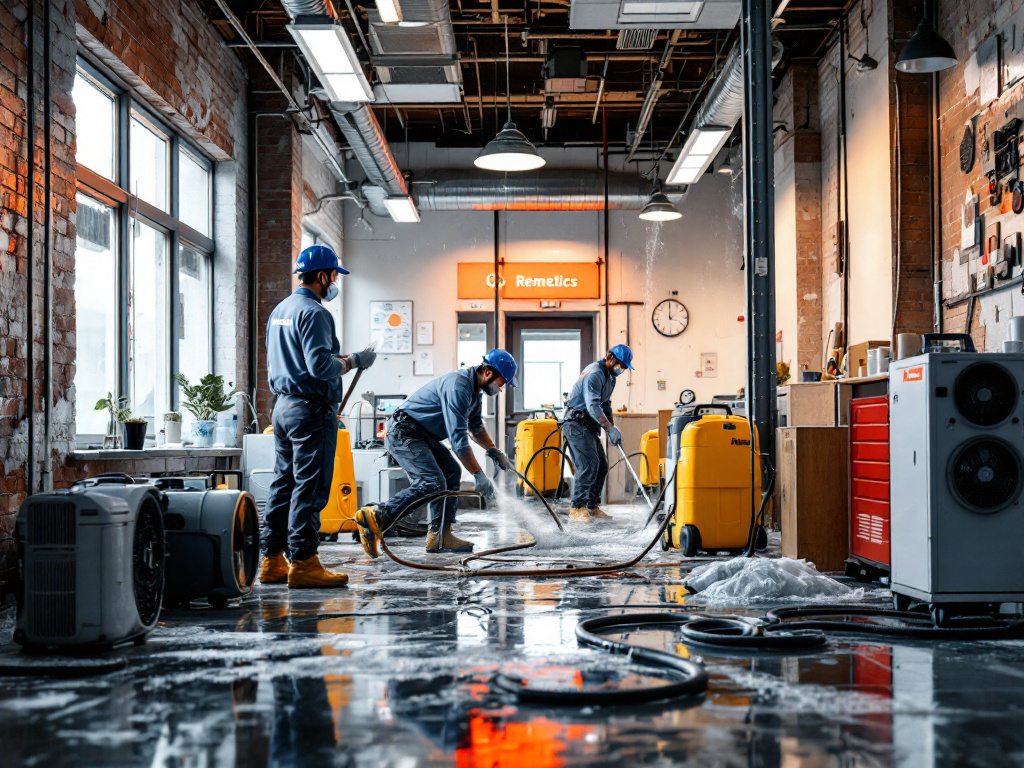
Understanding water intrusion cleanup
When you face commercial water intrusion cleanup, you need a partner who moves quickly to limit downtime and revenue loss. Water intrusion can stem from burst pipes, roof leaks, sprinkler malfunctions, or severe weather, and each source demands a tailored, compliant response. By addressing the intrusion promptly, you safeguard your assets, protect occupant health, and maintain business continuity.
A robust cleanup effort integrates emergency response, detailed inspection, advanced drying techniques, and precision repairs. In this article, you will learn how Remedics coordinates these workflows—leveraging large-scale equipment, safety protocols, and industry expertise—to restore your facility to pre-loss condition.
Initiating emergency restoration response
To stop water damage from spreading, you need rapid mobilization. Remedics offers 24/7 dispatch for commercial emergency restoration response, ensuring a qualified team arrives on-site within hours. Fast action reduces secondary damage such as mold growth, structural weakening, and content degradation.
Key steps in your emergency response:
- Immediate contact and triage: You speak with a restoration specialist who gathers details on the intrusion.
- Hazard mitigation: Technicians secure utilities, evaluate electrical risks, and put up containment barriers.
- Preliminary containment: Engineers deploy pumps and vacuums to extract standing water and prevent further migration.
- Compliance checkpoint: Every safety step aligns with OSHA standards and ANSI guidelines for water damage restoration.
| Phase | Typical duration |
|---|---|
| Inspection and assessment | 0–1 day |
| Water extraction | 1–3 days |
| Drying and dehumidification | 3–7 days |
| Cleaning and sanitization | 1–2 days |
| Repairs and reconstruction | Several days to months |
Table: Typical cleanup timeline [1]
Assessing damage and planning
A detailed inspection sets the foundation for your restoration plan. Remedics technicians identify the water source and categorize the intrusion from clean (Category 1) to black water (Category 3). Using moisture meters, infrared cameras, and hygrometers, they map hidden moisture pockets to target every wet area.
| Damage category | Description | Cost per sq ft |
|---|---|---|
| Category 1 (Clean water) | Potable sources with low risk | $3.50 |
| Category 2 (Gray water) | Contaminated sinks, appliance overflow | $5.25 |
| Category 3 (Black water) | Sewage, floodwater, hazardous waste | $7.50 |
Table: Cost per square foot by water category [2]
Your customized restoration plan will outline:
- Water mitigation scope
- Drying and dehumidification targets
- Cleaning and sanitization protocols
- Repair and reconstruction phases
- Compliance and documentation checkpoints
By mapping these milestones, you maintain transparency, control expenses, and track progress against your business continuity goals.
Applying water mitigation services
Fast, comprehensive water removal is the heart of mitigation. You rely on high-capacity pumps and industrial vacuums to extract hundreds or thousands of gallons, dramatically reducing drying time and preventing water migration within structural cavities [3].
Core mitigation techniques include:
- Emergency water removal with truck-mounted or portable extractors
- Controlled demolition of non-salvageable materials (wet drywall, insulation)
- Implementation of commercial flood cleanup and extraction
- Deployment of containment zones to protect unaffected areas
By integrating our commercial water mitigation services with early moisture mapping, you ensure that every wet surface and substrate is addressed before commencing the drying phase.
Employing industrial drying systems
Once bulk water is removed, you need advanced drying to whisk away residual moisture. Remedics uses industry-leading air movers, dehumidifiers, and specialty equipment placed strategically across your facility.
Best practices for structural drying:
- Follow ANSI S500 standards for a ratio of 7–8 air movers per extra-large dehumidifier or 10 air movers per two large dehumidifiers [4]
- Install commercial structural drying services to target walls, ceilings, and flooring assemblies
- Monitor moisture readings daily, adjusting equipment placement and settings for optimal performance
- Use air filtration devices (AFDs) with at least 500 CFM capacity to capture airborne particulates and protect air quality
By leveraging commercial high volume drying services, you can accelerate moisture removal, minimize microbial growth, and prepare the structure for cleaning.
Conducting cleaning and sanitization
After drying, surfaces, contents, and HVAC systems must be cleaned and disinfected to restore a healthy environment. Remedics deploys commercial-grade antimicrobial treatments, odor control measures, and thorough content restoration.
Key cleaning steps:
- Antimicrobial spray and fogging for Category 2 and 3 areas [5]
- Commercial decontamination and sanitization for high-touch surfaces and communal spaces
- Commercial content cleaning services to salvage furniture, electronics, and documents
- Industrial odor removal techniques to eliminate musty and chemical odors [6]
This phase seals out health hazards, prepares the site for rebuild, and restores a safe workspace for your team and customers.
Overseeing repairs and rebuild
With a fully dry, sanitized environment, you can begin restoration of structures and systems. Remedics coordinates every trade—carpentry, electrical, plumbing, painting—to return your property to pre-loss condition.
Your repair management includes:
- Securing permits and ensuring code compliance
- Engaging licensed subcontractors through commercial reconstruction services
- Managing budgets and timelines with commercial property damage project management
- Offering business property rebuild services for turnkey delivery
Whether you need minor drywall repairs or a full-scale renovation, this end-to-end approach minimizes your oversight burden and drives predictable outcomes.
Preventing mold and ensuring compliance
Moisture left unattended can trigger mold growth within 24 to 48 hours, leading to health risks and liability [7]. By coupling rapid drying with targeted remediation, you stop fungal colonies before they start.
Your mold prevention strategy:
- Engage a commercial mold remediation company for specialized interventions
- Leverage industrial mold removal services for HVAC systems and hard-to-reach areas
- Complete commercial black mold remediation when hazardous spores are detected
- Document every step to satisfy insurance and regulatory requirements
Remedics’ safety protocols and containment practices ensure that mold remediation integrates seamlessly with your broader restoration plan.
Why choose Remedics
When your facility demands a commercial-scale response, Remedics stands out for:
- Large-loss restoration for businesses ready to deploy surge capacity and specialized crews [8]
- End-to-end commercial facility restoration from initial mitigation through repairs
- Rapid, compliant commercial water damage restoration services aligned with federal and local regulations
- A unified command structure that simplifies communication and accountability
By partnering with Remedics, you gain a restoration ally who understands your urgency, maintains safety and compliance, and delivers reliable, measurable results. Whether you operate a retail chain, industrial warehouse, school, or multi-unit complex, our proven workflows will restore your property swiftly and thoroughly.


