
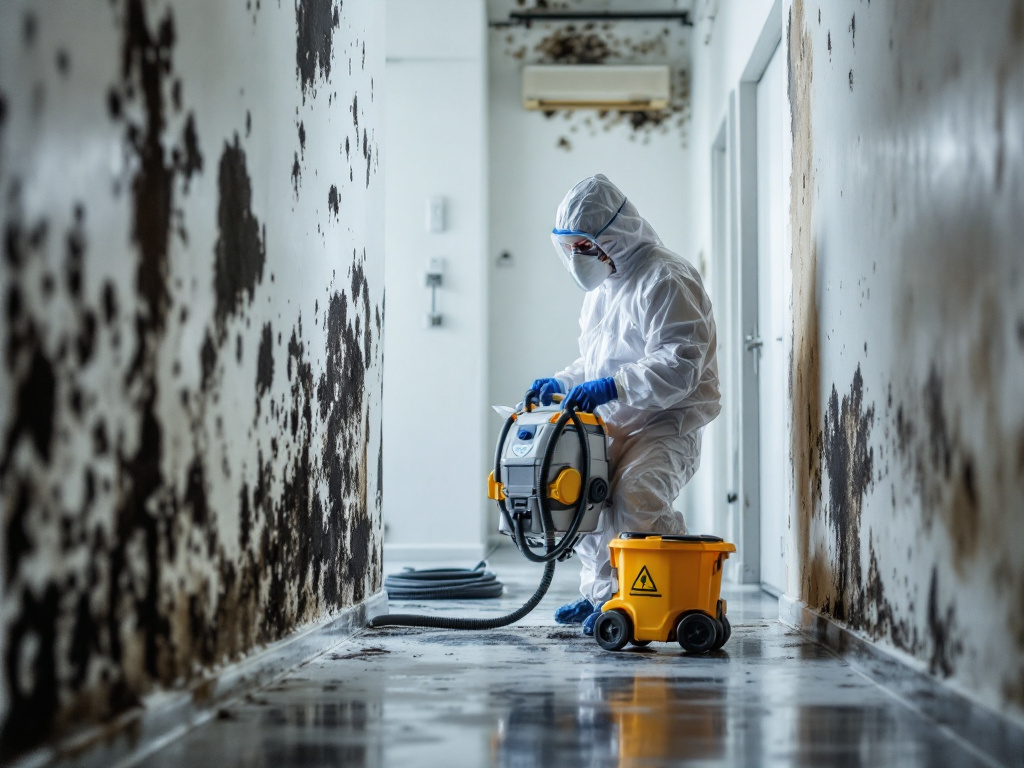
You rely on a clean, safe facility to keep your operations running smoothly. When water intrusion, humidity or hidden leaks allow black mold to take hold, you need a proven approach to commercial black mold remediation that protects your team, your assets and your reputation. In this guide you’ll learn how to identify dangerous mold growth, plan and execute a compliant remediation project, and leverage Remedics’ emergency restoration capabilities for rapid recovery.
Understand mold hazards
Black mold, especially Stachybotrys chartarum, poses serious threats to both human health and building integrity. In commercial settings it often colonizes on organic materials—such as drywall, wood, paper and insulation—when moisture levels exceed safe thresholds (EPA). Exposed occupants may develop respiratory issues, allergic reactions or even chronic pulmonary conditions like aspergillosis (Intertek). From a business standpoint unchecked mold can compromise structural beams, corrode HVAC systems and trigger liability claims.
Key mold hazards
- Health risks: asthma exacerbation, allergic rhinitis, chronic inflammatory pulmonary disease
- Material damage: decay of ceiling tiles, warping of wooden supports, compromised insulation
- Liability concerns: OSHA violations, tenant or employee health claims, code enforcement fines
Understanding these risks underscores why you should treat any visible discoloration, musty odor or moisture stain as a priority. Early detection and action will protect indoor air quality, maintain compliance with OSHA guidelines and preserve the lifespan of your facility.
Assess contamination scope
Before you mobilize crews, conduct a thorough assessment to define the size, location and type of mold infestation. Engage environmental professionals for infrared scanning, moisture mapping and spore testing. Your assessment should cover:
- Visible contamination: walls, ceilings, floors, HVAC registers
- Hidden growth: behind drywall, under flooring, inside ductwork
- Moisture sources: plumbing and roof leaks, condensation in HVAC, flooding remnants
Document the square footage of affected areas and classify contamination levels. For mold growth under 10 square feet you may handle containment in-house, but larger or sensitive-area infestations warrant full professional remediation (EPA). Regular inspections every 6–12 months can catch hidden mold early and minimize costly disruptions (Palmetto Environmental Solutions).
Develop remediation plan
A detailed remediation plan aligns the project team, outlines safety measures and ensures regulatory compliance. Your plan should address three critical areas:
Categorize contamination
Define whether mold is non-toxic or potentially toxic (black mold). Classify work zones as limited (10–100 sq ft) or large (> 100 sq ft) to determine containment requirements (EPA).
Containment strategy
Specify single-layer polyethylene sheeting for limited zones and double layers with decontamination chambers for large zones. Include negative air pressure systems and designated entry/exit points.
Budgeting and cost factors
Estimate costs based on industry averages and project complexity. Typical remediation budgets run between $1,200 and $3,750 per event, with an average cost of $2,300 (This Old House). Per-square-foot pricing ranges from $10 to $25, with smaller jobs incurring higher rates due to minimum labor charges.
| Location or type | Cost range |
|---|---|
| General remediation | $1,200 – $3,750 (avg $2,300) [1] |
| Per square foot | $10 – $25 [1] |
| HVAC mold removal | $1,500 – $10,000 [1] |
| Basement mold | $500 – $3,000 [1] |
| Attic mold | $1,000 – $4,000 [1] |
Note that commercial proposals can vary widely. One homeowner received estimates from $20,000 to $63,000 for a basement remediation scope [2]. Your plan should build in contingencies for hidden damage and secondary restoration tasks.
Implement containment measures
Containment is your first line of defense against spore spread. Effective setups include:
- Enclosing work zone with 6-mil polyethylene for areas up to 100 sq ft
- Double-layer poly with zipper walk-through and airlocks for larger zones
- Negative air machines with HEPA filters to maintain inward air pressure
- Floor-to-ceiling seals to isolate mold-affected rooms
By adhering to EPA guidelines you prevent mold spores from migrating into active work or occupied areas. Use visual monitoring of pressure gauges and perform air clearance tests before dismantling barriers.
Execute mold removal
Once containment is in place, focus on physically removing contaminated materials and cleaning affected surfaces. Key steps include:
- Wet vacuum non-porous surfaces to capture moisture and spores
- Damp-wipe walls, ceilings and fixtures with detergent or detergent-water solutions
- HEPA vacuum after surfaces dry, targeting corners, vent grilles and baseboards
- Remove and discard unsalvageable porous materials—such as drywall, carpeting or insulation—sealed in impermeable bags
- Perform post-cleaning HEPA vacuuming of floors and HVAC components
Cleaning must eliminate spores, not just kill mold. Dead spores can still provoke allergic responses (EPA).
Follow safety protocols
Protecting your workforce and occupants is non-negotiable. Enforce these requirements on every remediation job:
- NIOSH-certified respirators (N-95 or higher), with fit-testing and medical clearance [3]
- Disposable or washable coveralls with boot covers and gloves
- Eye protection: goggles or full-face respirators with HEPA filters
- Onsite health and safety officer to oversee PPE usage and decontamination procedures
- Training in mold handling, containment setup and spill response
Strict compliance with OSHA standards reduces liability and ensures a safe, professional worksite.
Control moisture sources
Mold growth recurs if moisture problems remain unaddressed. Your remediation must include:
- Leak detection and repair in plumbing, roofing or HVAC drains
- Improved ventilation or dehumidification to maintain indoor humidity between 30% and 50% (Intertek)
- Installation of vapor barriers in crawl spaces and basements
- Routine HVAC maintenance and filter changes
- Grading and drainage improvements around building foundations
Consider integrating mold remediation with your broader water damage response—such as commercial water intrusion cleanup—to ensure all moisture pathways are sealed.
Leverage Remedics capabilities
When your facility demands large-scale remediation, tight timelines and strict compliance, you need a partner with proven commercial workflows. Remedics offers:
- 24/7 emergency response for rapid containment and hazard mitigation [4]
- High-volume drying equipment to reduce downtime and prevent microbial regrowth [5]
- Industrial-grade dehumidifiers and structural drying teams for complete moisture control [6]
- In-house project management to coordinate multi-discipline restoration and staging
- Full adherence to EPA, OSHA and ACGIH standards to keep your facility compliant
Our large-loss management expertise means you avoid the delays and gaps that can occur when multiple subcontractors handle different phases.
Partner with Remedics
By choosing Remedics as your commercial mold remediation company, you gain a single point of contact for inspection, containment, removal and final clearance testing. We combine technical expertise with hands-on experience in diverse facilities—retail chains, schools, industrial warehouses and multi-unit properties—to deliver a turnkey solution. To discuss your next project or schedule a site assessment, visit our commercial mold remediation company page or call our emergency line today.


