
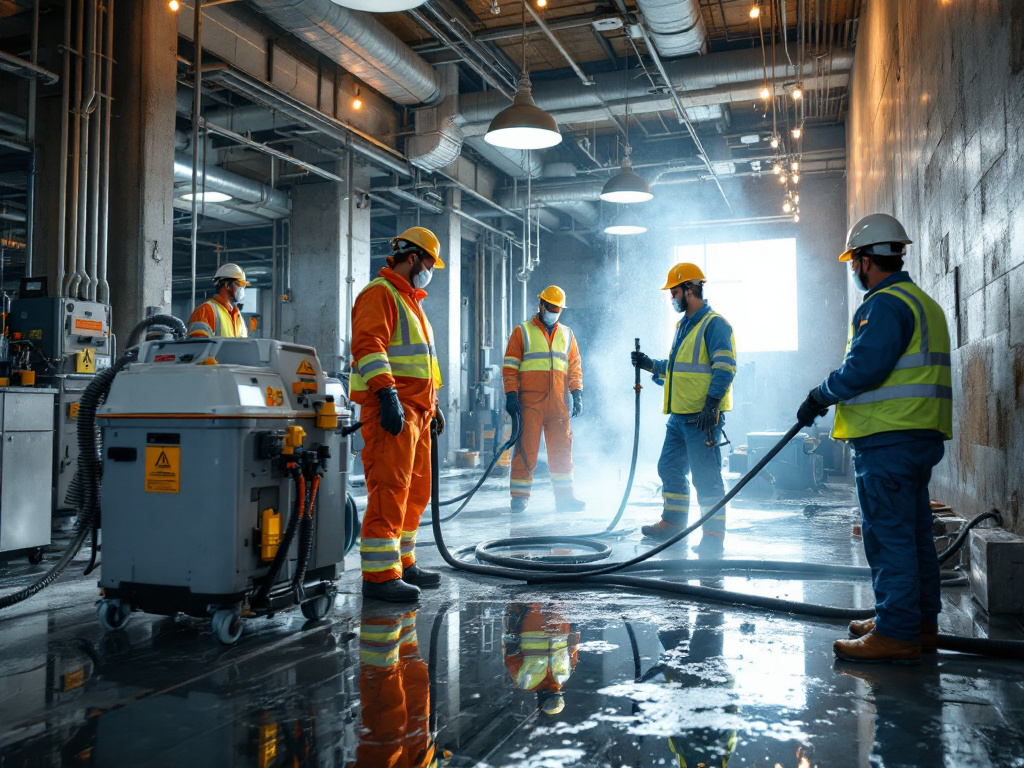
Commercial water mitigation services are your first line of defense when flooding, leaks, or storms threaten your facility. If you’re responsible for keeping operations running smoothly, you need fast, professional intervention to remove water, limit damage, and get your teams back to work. By partnering with experts who follow a structured mitigation workflow, you’ll minimize downtime, protect assets, and comply with safety regulations.
In this article, you’ll learn how a coordinated approach—from emergency response to final restoration—saves your business time and money. We’ll break down each step, highlight key equipment and protocols, and show why you can trust Remedics for rapid, compliant commercial water mitigation services.
Understand commercial water mitigation
Distinguish mitigation from restoration
Water mitigation focuses on stopping damage and preventing secondary issues like mold, while restoration repairs or replaces affected materials. Mitigation includes emergency water removal and drying, whereas restoration tackles reconstruction, refinishing, and rebuilding to pre-loss condition.
Identify water types and classes
Classifying the water you’re dealing with helps determine safety precautions and costs:
- Category 1 (clean water) from broken pipes or rain
- Category 2 (gray water) with contaminants like detergents
- Category 3 (black water) from sewage or floodwaters
Similarly, damage classes range from Class 1 (minor, low-porosity materials) to Class 4 (severe, deeply embedded moisture). Higher categories and classes require specialized protocols and equipment.
Estimate mitigation costs
Costs vary by water type, damage severity, and facility size. Typical U.S. averages include $1,383 to $6,356 per event, with extremes from $450 to $16,000 [1]. Commercial pricing often falls between $3 and $7.50 per square foot based on contamination level [2].
| Repair type | Average cost |
|---|---|
| Roof repairs | $1,100 ([Angi]) |
| Ceiling repairs | $450–$1,600 ([Angi]) |
| Basement restoration | $500–$2,800 ([Angi]) |
| Mold removal | $2,225 ([Angi]) |
| Black water extraction | Up to $16,000 ([Royal Restoration DMV]) |
Begin emergency response
Prioritize safety
Before anyone enters the affected area, you’ll ensure your team follows OSHA guidelines. Wear personal protective equipment, confirm structural stability, and assess electrical hazards.
Isolate utilities
Shut off electricity, gas, and water at the main valves to prevent shocks, fire risks, or additional flooding. This quick action protects occupants and remediation crews.
Protect unaffected areas
Set up containment barriers with plastic sheeting and negative air machines to stop cross-contamination. You’ll limit moisture migration and airborne particulates, keeping clean zones operational. For full scope services, see our commercial emergency restoration response.
Conduct thorough inspection
Use moisture detection
Technicians deploy moisture meters and infrared cameras to pinpoint hidden water behind walls, under floors, and above ceilings. This precise mapping informs your mitigation plan.
Assess structural impact
Examine load-bearing elements, HVAC systems, and electrical components. Early identification of compromised materials prevents safety issues and guides scope of work.
Document conditions
Capture detailed notes, photos, and digital reports for insurance and compliance. Accurate documentation streamlines approvals and keeps stakeholders informed.
Remove standing water
Deploy industrial pumps
High-capacity pumps and truck-mounted extraction units can remove thousands of gallons per hour. Rapid water removal reduces hydrostatic pressure on walls and slabs.
Extract hidden moisture
Commercial wet/dry vacuums and squeegees clear residual pools. Crews then tackle low-lying areas with submersible pumps to protect baseboards and flooring.
Manage disposal procedures
You’ll follow EPA regulations for gray or black water disposal. Licensed waste haulers transport contaminated water to approved treatment facilities, ensuring legal compliance.
Perform drying and dehumidification
Employ high-volume drying
Powerful air movers accelerate evaporation, directing moist air toward dehumidifiers. Using commercial drying and dehumidification services ensures optimal airflow patterns in large spaces.
Monitor moisture levels
Continual readings from data-logging sensors verify drying progress. You’ll adjust equipment settings in real time to maintain target humidity below 40 percent.
Integrate structural drying services
For slabs, walls, and ceilings, structural drying injects heated air into cavities. This specialized process tackles Class 4 damage, safeguarding critical building components.
Clean and sanitize surfaces
Address gray and black water
Areas exposed to Category 2 or 3 water need rigorous cleaning. Technicians remove biohazardous residues and then apply disinfectants rated for commercial use.
Apply approved disinfectants
Using EPA-registered products, crews sanitize all impacted surfaces—wood, concrete, metal—to neutralize bacteria, viruses, and odors.
Prevent mold growth
Within 24 to 48 hours of water exposure, mold can colonize porous materials. Prompt cleaning and drying interrupts this timeline, reducing future remediation costs. For mold-specific solutions, explore our commercial mold remediation company.
Restore affected structures
Repair building materials
Once dry, you’ll replace or repair drywall, insulation, ceiling tiles, and flooring. Proper material selection prevents warping and microbial regrowth.
Coordinate large-loss management
For significant events, you need project managers who oversee multiple crews, subcontractors, and material deliveries. Remedics excels in large loss restoration for businesses, maintaining efficiency at scale.
Reconstruct damaged areas
Full reconstruction may involve framing, electrical, plumbing, and paint. Your restoration partner should synchronize these trades to return your facility to pre-loss condition quickly.
Ensure safety compliance
Follow industry standards
Remedial work adheres to IICRC S500 and S520 guidelines, along with local building codes and EPA regulations. These standards guarantee consistent quality and safety.
Maintain documentation
You’ll receive daily logs, moisture maps, and compliance certificates. Detailed records support insurance claims and demonstrate due diligence.
Verify certifications
Confirm that technicians hold IICRC, ACAC, or NEHA credentials. Certified professionals are trained in the latest remediation methods and safety protocols.
Maintain business continuity
Minimize operational downtime
Strategic work scheduling—such as off-hour drying and phased reconstruction—lets you keep critical functions running. A rapid mitigation partner reduces revenue loss.
Communicate with stakeholders
Provide regular status updates to employees, tenants, insurers, and regulators. Transparent communication builds trust and aligns expectations.
Plan for resilience
Post-mitigation, implement preventative measures like improved drainage, routine pipe inspections, and moisture sensors. These steps protect your property against future incidents.
Choose Remedics services
Evaluate rapid response
Remedics delivers 24/7 emergency dispatch, arriving on site within hours. Fast mobilization curbs damage and gets you back in business sooner.
Review equipment capacity
With a fleet of industrial pumps, air movers, and dehumidifiers, Remedics tackles projects of any size. You’ll never wait for scarce resources.
Confirm compliance expertise
Our teams maintain IICRC certifications and follow strict safety protocols. When you choose Remedics for commercial facility restoration, you partner with a compliant, knowledgeable pro ready to save your business time and money.


