
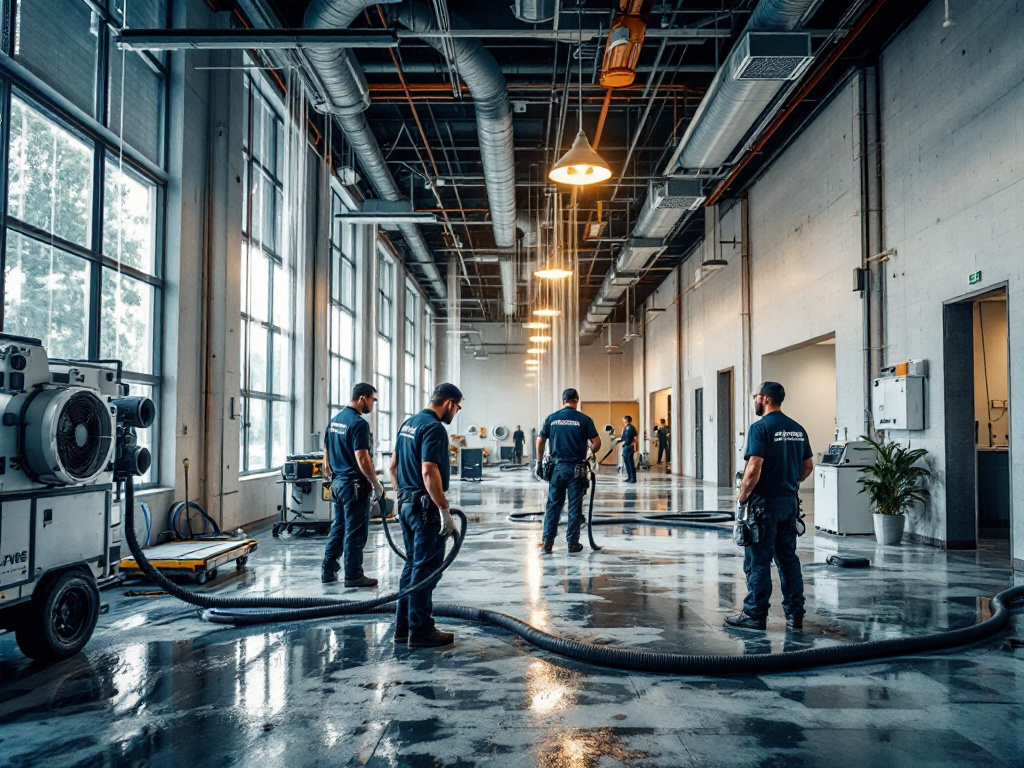
As a facility manager or property owner, you know that unexpected water intrusion can grind your operations to a halt. Commercial water damage restoration services combine rapid response, industrial-grade equipment, and coordinated workflows to get your business back online fast. By assessing damage, extracting water, drying structures, sanitizing affected areas, and rebuilding with precision, you can avoid costly downtime, protect your assets, and safeguard your reputation.
Commercial water damage restoration services bring together mitigation specialists, large-scale drying systems, and compliance protocols so you can focus on running your operations, not managing a crisis. In the sections that follow, you’ll learn how a structured restoration process minimizes revenue loss and why businesses trust Remedics for rapid, compliant commercial restoration.
Understand downtime impact
Even a few inches of standing water can disrupt critical systems, halt production lines, and force closures. You may face:
- Lost sales during shutdowns
- Overtime costs for recovery crews
- Penalties for unfulfilled contracts
- Reputation damage with customers or tenants
By acting swiftly with professional restoration, you limit these risks. A fast, organized response preserves your revenue stream and helps you resume normal operations sooner.
Assess water damage
Before remediation begins, you need a clear picture of the problem.
Conduct comprehensive inspection
Your restoration partner should perform an onsite assessment to:
- Identify the water source and category (clean, gray, black)
- Document affected areas with photos and moisture readings
- Determine building materials at risk (drywall, flooring, insulation)
ServiceMaster Rapid Response-Topeka recommends using moisture meters and infrared cameras for hidden water detection [1].
Detect hidden moisture
Lingering moisture can lead to mold growth within 24 to 48 hours, posing health hazards and compliance issues [1]. Infrared thermography or moisture probes help pinpoint damp pockets behind walls, under carpets, and inside ceilings.
Link your inspection to preventive services like commercial leak source identification to stop future intrusions at the source.
Initiate emergency mitigation
Once you know what you’re up against, fast action prevents further damage.
Extract standing water
High-capacity pumps and vacuums remove pooling water within hours. Some providers guarantee technician arrival in under an hour within service zones [2]. Initial mitigation often takes 1 to 8 hours, depending on flood volume and site complexity.
- Engage commercial flood cleanup and extraction teams for rapid water removal
- Call out commercial burst pipe cleanup specialists to address internal plumbing failures
Seal leak sources
While extraction is underway, technicians identify and stop active leaks—whether from ruptured pipes, damaged roofs, or failed sprinkler systems. Partnering with commercial water mitigation services ensures you tackle the root cause, not just the symptoms.
Implement structural drying
With standing water gone, your focus shifts to moisture removal within building materials.
Deploy industrial dehumidification
Commercial projects rely on industrial-grade dehumidifiers, including LGR (low-grain refrigerant) units that excel in cooler conditions to remove more moisture per hour than standard models. LGR technology dries carpets, hardwood, and structural cavities, inhibiting mold growth and shortening overall project time [3].
- Coordinate with commercial structural drying services
- Scale up with commercial high volume drying services
Explain LGR technology
LGR dehumidifiers reduce relative humidity to below 40% while operating efficiently in ambient temperatures as low as 33°F, making them ideal for large, unheated commercial spaces.
Monitor moisture removal
Air movers and targeted airflow patterns accelerate evaporation. Technicians log daily moisture readings and adjust equipment placement until building materials reach safe dryness levels.
- Integrate commercial drying and dehumidification services
- Leverage infrared checks for hidden pockets of dampness
According to Alpha Environmental, drying can take three to five days in commercial settings, depending on exposure and flood size [4].
Perform cleaning and sanitization
After structural drying, next comes restoring a clean, healthy environment.
Apply antimicrobial treatments
Water-exposed surfaces require disinfection to eliminate bacteria, viruses, and fungi. Professional teams use EPA-approved antimicrobial solutions to treat walls, floors, and HVAC systems.
- Engage commercial decontamination and sanitization experts
- Deploy HEPA-filtered air scrubbers with UV light for airborne pathogen removal [3]
Choose EPA-approved products
Selecting the right disinfectants ensures compliance with OSHA and CDC guidelines, critical in healthcare, food service, and educational facilities.
Control odors
Lingering musty smells can drive away tenants and customers. Industrial deodorization uses activated carbon filters and ozone generators to neutralize odors at the molecular level.
- Partner with industrial odor removal services
- Utilize commercial odor control and removal
Coordinate repairs and rebuilding
With the site dry and sanitized, you transition to structural repairs.
Evaluate restoration scope
Your project manager will develop a scope of work that covers:
- Demolition of irreparable materials
- Replacement of drywall, insulation, and flooring
- Electrical and plumbing inspections
Transparent estimates help you plan budgets and timelines.
Manage reconstruction
Skilled trades execute the rebuild, restoring walls, ceilings, and fixtures to pre-loss condition.
- Use commercial reconstruction services for general contracting
- Rely on business property rebuild services to coordinate sub-contractors
| Restoration phase | Typical duration |
|---|---|
| Emergency mitigation | 1–8 hours |
| Drying and dehumidification | 3–7 days |
| Cleaning and sanitization | 1–3 days |
| Repairs and rebuilding | 30–90 days, depends on complexity |
Ensure compliance and safety
Maintaining regulatory standards protects occupants and limits liability.
Follow regulatory standards
Your restoration partner should adhere to industry standards from IICRC, EPA, and local building codes. Proper mold remediation protocols stop health hazards before they start.
- Engage a commercial mold remediation company for mold inspections and removal
- Schedule commercial safety compliance restoration audits
Document restoration process
Detailed records—photos, moisture logs, equipment usage—support insurance claims and demonstrate due diligence for audits.
- Coordinate with commercial property damage project management teams
Untreated water damage can lead to mold within 24–48 hours, making fast, documented action essential [1].
Leverage Remedics expertise
When downtime isn’t an option, you need a partner with proven capacity for large-scale commercial projects.
Offer rapid emergency response
Remedics’ 24/7 emergency hotline connects you to certified technicians who mobilize within hours. Your site gets priority for water extraction, drying, and disinfection.
- Benefit from commercial emergency restoration response
Support large-loss management
From multi-story office buildings to industrial warehouses, Remedics handles complex loss profiles with in-house specialists in structural drying, mold remediation, and reconstruction.
- Scale up with large loss restoration for businesses
- Entrust your facility to commercial facility restoration experts
Remedics invests in industrial-grade pumps, LGR dehumidifiers, HEPA scrubbers, and drone-assisted inspections to streamline every phase of restoration.
By partnering with Remedics for commercial water damage restoration services, you’re securing rapid, compliant recovery that minimizes revenue loss and gets your operations back on track. Contact Remedics today to learn how our integrated workflows and large-scale resources can protect your bottom line.


