
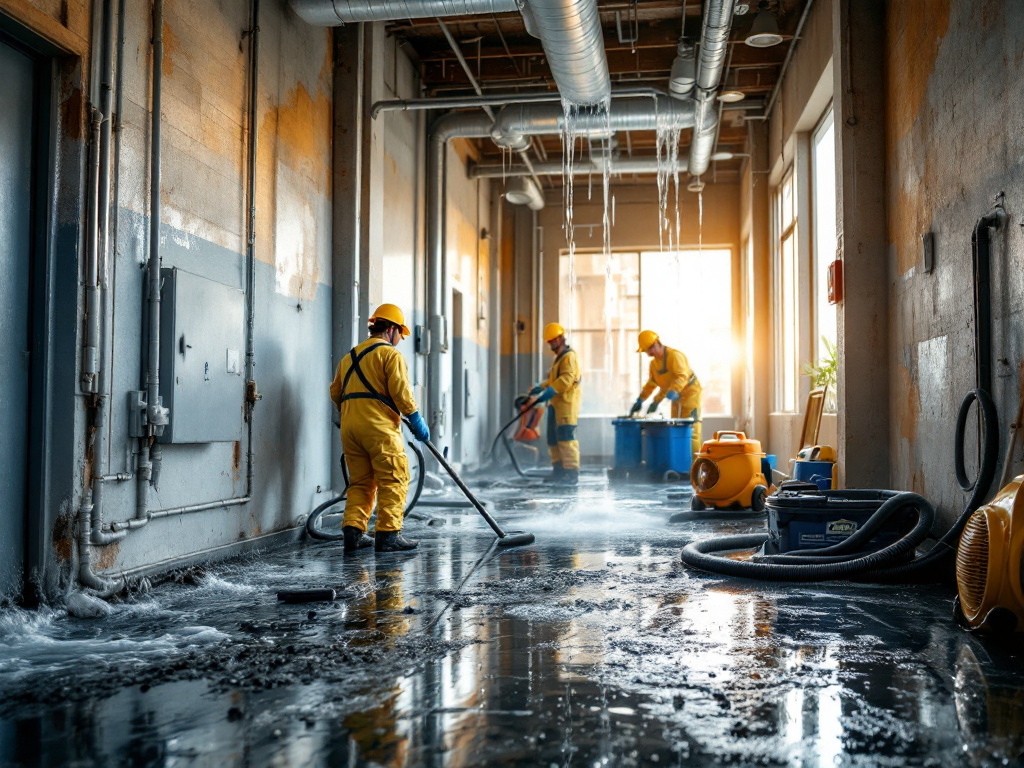
When a burst pipe floods your commercial property, you need a clear, coordinated plan for commercial burst pipe cleanup to protect your facility, assets and bottom line. In large buildings—whether retail stores, office complexes, schools or industrial sites—uncontrolled water can damage walls, flooring and equipment, and create ideal conditions for mold growth within 24 to 48 hours [1]. Standing water can release hundreds of gallons in hours, making rapid removal critical to minimize costly repairs [2]. At Remedics, our integrated workflows, commercial-scale equipment and strict safety protocols ensure you restore operations quickly, compliantly and with minimal downtime.
Below is your step-by-step cleanup plan—from stopping the leak to final reconstruction—so you can get back to business fast.
Stop water intrusion
Stop the water source
First, locate and shut off the valve controlling the burst pipe to prevent further flooding. If the leak involves multiple fixtures or hidden lines, engage licensed plumbers immediately. At the same time, contact our commercial emergency restoration response team for rapid on-site support.
Ensure safety protocols
Before entering wet zones, verify that electricity is shut off to affected areas. Post warning signs, establish restricted-access zones and provide personal protective equipment for your staff and ours. In healthcare or senior living facilities, containment procedures must follow infection control risk assessments (ICRA) to protect patients and residents [3].
Extract water rapidly
Deploy extraction equipment
Quick removal of standing water is critical. Our crews use high-capacity, truck-mounted water extractors capable of hundreds of gallons per minute, along with commercial wet vacs for smaller or hard-to-reach areas. These tools power through large flood volumes and connect to our 24/7 emergency response fleet.
Categorize water contamination
Classify the water as Category 1 (clean), Category 2 (grey) or Category 3 (black) to determine necessary safety measures. Grey or black water from mixed sources demands stricter protocols and may require air scrubbers with HEPA filters to remove airborne pathogens [4].
Monitor moisture levels
Use pin-type and pinless moisture meters and sensors to scan wood, drywall and concrete. Accurate readings guide extraction efforts and ensure you’re not leaving pockets of trapped water that could fuel mold growth [4].
| Equipment | Purpose |
|---|---|
| Truck-mounted extractor | High-volume removal in open floor areas |
| Commercial wet vacuum | Targeted extraction around machinery and consoles |
| Moisture meters | Pin and pinless moisture detection in materials |
| Air scrubbers with HEPA | Contaminant removal during extraction of grey/black water |
Dry and dehumidify effectively
Industrial air movers
After bulk water removal, position axial air movers to accelerate evaporation from floors, walls and ceilings. High-volume airflow reduces drying time and curbs microbial growth in hidden cavities.
Commercial dehumidifiers
Deploy desiccant or refrigerant dehumidifiers suited to warehouse or cold storage environments. Removing residual moisture is essential, as mold can begin within 48 hours of water exposure [5].
Continuous moisture mapping
Combine thermal imaging with digital moisture scanning to track drying progress in real time. Adjust equipment placement based on evolving readings, ensuring every wet area receives attention from our commercial drying and dehumidification services team.
Mitigate mold and contaminants
Initiate mold remediation
With moisture controlled, start proactive mold treatment. Our certified technicians follow industry best practices to contain affected zones, remove visible mold and apply EPA-registered antimicrobials. Preventive action is vital—mold spores can proliferate within 24 to 48 hours after water intrusion [1].
Sanitize and decontaminate
In grey- or black-water scenarios, thorough disinfection is nonnegotiable. We use hospital-grade disinfectants and fogging equipment to decontaminate HVAC ducts, ceilings and walls. For industrial sites, our industrial mold removal services ensure compliance with health regulations.
Restore structure and contents
Structural drying services
Once the space is sanitized, our commercial structural drying services team reinforces building integrity by drying subfloors, wall cavities and insulation. We adhere to IICRC S500 water restoration standards to restore your facility correctly and quickly [6].
Content pack out and cleaning
Every piece of furniture, electronics or inventory is inventoried, packed out and transported to our secure cleaning facility. Our commercial pack out and inventory services streamline the process, reducing on-site clutter and speeding up structural repairs.
Reconstruction and repairs
Partner with our in-house contractors for framing, drywall, flooring repair and finish work. Our commercial reconstruction services team coordinates seamlessly with cleanup crews, so you avoid scheduling conflicts and additional downtime.
Manage insurance and compliance
Document damage and costs
Accurate records are essential for smooth insurance claims. We provide detailed moisture maps, scope of work estimates and photographic evidence. The average cleanup cost for Category 1 damage starts at $3,000, with reconstruction budgets ranging from $5,000 to $15,000 or more depending on scope [6].
Coordinate with insurers
Remedics works directly with your carrier, using approved estimating software to submit scopes and progress reports. Early filing—ideally within 48 hours of the incident—speeds approvals and funding [1].
Follow safety standards
Our protocols meet OSHA requirements and local building codes. In sensitive environments such as hospitals or schools, we perform ongoing infection control risk assessments [3] and maintain documentation for your auditors.
Minimize business downtime
Maintain operational continuity
Develop a phased restoration schedule that prioritizes critical areas—server rooms, production lines or customer zones—so you can keep key functions running. Your Remedics project manager ensures trades don’t overlap and workflows remain efficient.
Communicate with stakeholders
Keep employees, tenants or customers informed with regular updates on timelines and access restrictions. Visible progress reporting builds confidence and helps you manage expectations.
Schedule phased restoration
Segment large spaces into work zones and dry them sequentially. This “zone-by-zone” approach allows unaffected areas to remain operational while cleanup continues elsewhere. For major facilities, consider our large loss restoration for businesses services to orchestrate complex, multi-phase projects.
Why trust Remedics
Rapid emergency restoration
Our 24/7 response teams deploy within hours, not days, to stop water intrusion and mobilize extraction fleets. You’ll get dedicated crews ready to work around the clock.
Strict safety protocols
From lockout-tagout procedures to infection control assessments, we prioritize safety at every step. All technicians carry IICRC and OSHA certifications to maintain compliance on your site.
Comprehensive equipment fleet
Remedics maintains an extensive inventory of truck-mounted extractors, industrial air movers, desiccant dehumidifiers, air scrubbers and moisture-detection sensors. We scale equipment to your facility size—whether it’s a single storefront or a multi-building campus.
By following this commercial burst pipe cleanup plan—with Remedics as your partner—you’ll protect your assets, comply with regulations and get operations back online faster. For specialized services, explore our commercial water intrusion cleanup, commercial water mitigation services and full-suite commercial water damage restoration services. When every minute counts, trust Remedics for rapid, compliant commercial restoration.


