
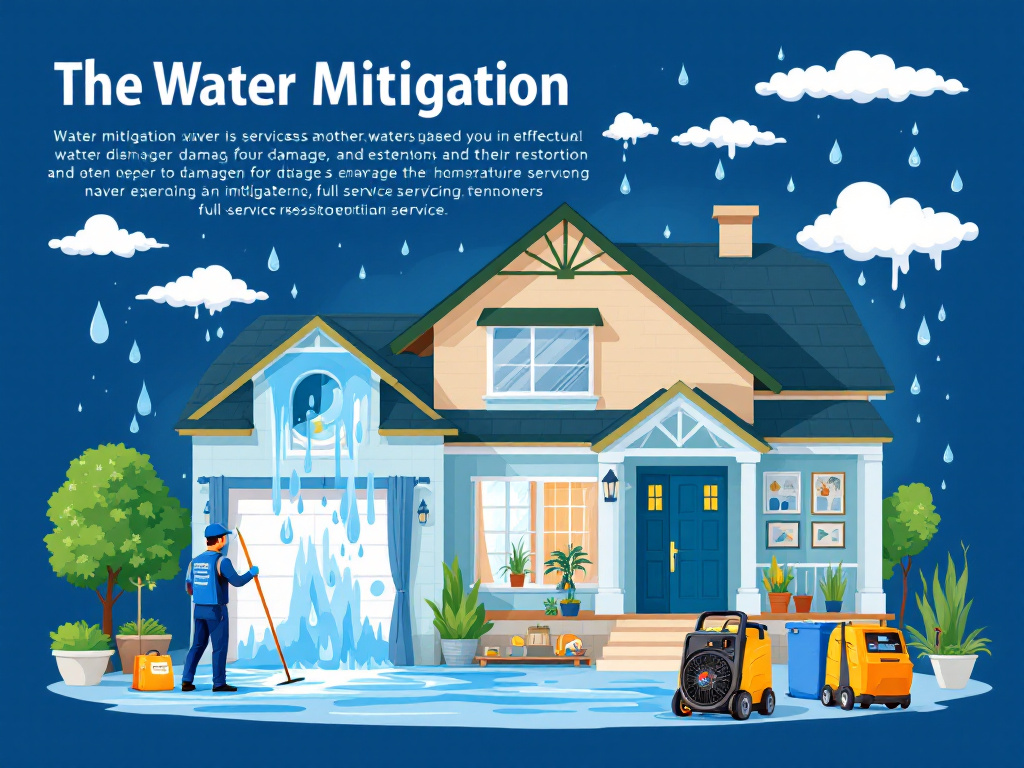
When water intrudes into your home—whether from a burst pipe, heavy rain or an appliance failure—you need fast, expert water mitigation services for homeowners to halt damage and protect your property. Water mitigation focuses on emergency response, moisture detection, rapid water extraction, drying, dehumidification and sanitization before full-scale repairs begin. You might be tempted to tackle flooding yourself, but hidden moisture, structural weakening and mold growth pose serious health and financial risks. The CDC warns that flood cleanup can be too difficult or dangerous without professional help [1].
Industry data shows that 14,000 people in the U.S. experience a water damage emergency at home or work every day, leading to about $13 billion in property losses each year. Nearly 98 percent of basements suffer some form of water damage over their lifetime, underscoring the need for expert intervention [2]. In this guide, you’ll learn how to assess damage, execute an effective mitigation process, manage full restoration and prevent future incidents. We’ll also explain how Remedics serves as your single-source partner—from emergency cleanup through reconstruction and insurance coordination—to give you peace of mind and a home restored to pre-loss condition.
Understand water mitigation
Definition and benefits
Water mitigation services focus on stopping ongoing damage and stabilizing your home after a water event. Unlike restoration, which repairs and rebuilds affected materials, mitigation is a temporary solution that:
- Contains leaks or flooding
- Removes standing water
- Dries and dehumidifies structures
- Sanitizes contaminants
By acting fast, you limit structural weakening and reduce mold risk, saving time and money down the line.
Mitigation vs restoration
While mitigation halts the spread of water and moisture, restoration returns your property to its pre-loss condition. A typical workflow starts with mitigation—emergency response, extraction, drying—then moves into restoration steps such as drywall repair, reconstruction and final cleaning.
Why speedy action matters
Mold can begin to grow on wood, drywall, carpet and furniture in just 24 hours, posing respiratory risks [3]. Quick mitigation stops hidden moisture pockets from spawning mold colonies, structural rot and electrical hazards.
Assess your damage
Initial property inspection
A trained technician evaluates all affected areas, documenting visible damage and identifying water sources. This phase often includes a residential property damage assessment to guide your insurance claim.
Moisture detection techniques
Professionals use advanced meters and sensors to uncover hidden moisture in walls, floors and ceilings. Early detection prevents lingering dampness that could lead to mold or wood rot.
Insurance coordination
Your mitigation provider should compile a detailed inventory of damaged areas, prepare moisture logs and submit documentation to your insurer. Remedics streamlines this process, ensuring nothing is overlooked.
Execute mitigation process
Stop water intrusion
Technicians locate and halt active leaks or shut off flood sources. If necessary, they secure entry points and set up containment barriers.
Extract standing water
High-capacity pumps and vacuums remove visible water rapidly. Your crew may deploy emergency water extraction for homes equipment such as:
- Truck-mounted vacuums
- Portable extractors
Dry and dehumidify
Commercial-grade air movers and dehumidifiers drive moisture out of building materials. Proper airflow prevents warping, swelling and secondary damage.
Clean and disinfect surfaces
After drying, crews sanitize floors, walls and contents to remove bacteria and contaminants. This step often integrates water damage cleanup for residential properties protocols to protect your indoor air quality.
Manage restoration workflow
Demolition and removal
Unsalvageable materials—wet drywall, soaked insulation, damaged flooring—are removed safely. Proper demolition readies spaces for rebuild.
Structural drying services
Specialized equipment ensures hidden cavities and structural elements reach safe moisture levels. Remedics offers comprehensive residential structural drying services to protect beams and joists.
Content cleaning and pack-out
Furniture and personal items are inventoried, packed out and cleaned off-site as needed. Partner with our home inventory and content pack out services to safeguard valuables during reconstruction.
Odor removal
Musty smells from hidden moisture are neutralized with industrial ozone or hydroxyl generators, leaving your home fresh and safe.
Prevent future incidents
Leak detection systems
Install sensors near appliances, plumbing fixtures and in crawlspaces to alert you to leaks early. A proactive residential leak detection and water cleanup plan can stop damage before it starts.
Maintenance best practices
Keep gutters and downspouts clear, replace old hoses every five years and know the location of your main shut-off valve. Regular inspections reduce risk.
Preventive equipment installation
Consider sump pumps, backup power for dehumidifiers or whole-house leak detection systems. These investments pay dividends when disaster strikes.
Budget for services
Average restoration costs
In 2025, homeowners spend between $1,361 and $6,270 on professional water damage restoration, averaging around $3,814. Simple jobs may start at $450, while extreme cases can climb above $16,000 [4].
Cost variations by water category
Water category affects pricing per square foot:
| Water type | Cost per sq ft |
|---|---|
| Category 1 (clean) | $3.50 |
| Category 2 (gray) | $5.25 |
| Category 3 (black) | $7.50 |
Emergency fees explained
After-hours or urgent services may add $50–$200 to standard rates. Expect labor at $70–$200 per hour plus equipment and safety charges.
Select the right provider
Certification and equipment
Choose a company with IICRC-certified technicians, proper licensing and commercial-grade drying gear. Certification ensures adherence to industry best practices.
Response time and availability
Rapid arrival—ideally within four hours—minimizes secondary damage. Look for 24/7 emergency response and local staffing.
Single-source convenience
A full-service partner handles mitigation, restoration, reconstruction and insurance support. You avoid juggling multiple vendors and ensure project continuity.
Rely on Remedics expertise
End-to-end full-service support
Remedics combines mitigation, structural drying, mold remediation and rebuilding under one roof. From your first call to final walkthrough, we manage every step.
Insurance coordination
Our team prepares damage assessments, moisture logs and itemized estimates to streamline claims. We work directly with adjusters so you don’t have to.
Customer satisfaction guarantees
We stand behind our work with warranties on drying, remediation and reconstruction. Your safety, comfort and home value drive everything we do.
With clear workflows, rapid response and a single-source approach, Remedics delivers professional water mitigation services for homeowners you can trust. When you need full-service residential restoration—whether water, fire, smoke or mold—rely on us to restore your home to its pre-loss condition with confidence.


