
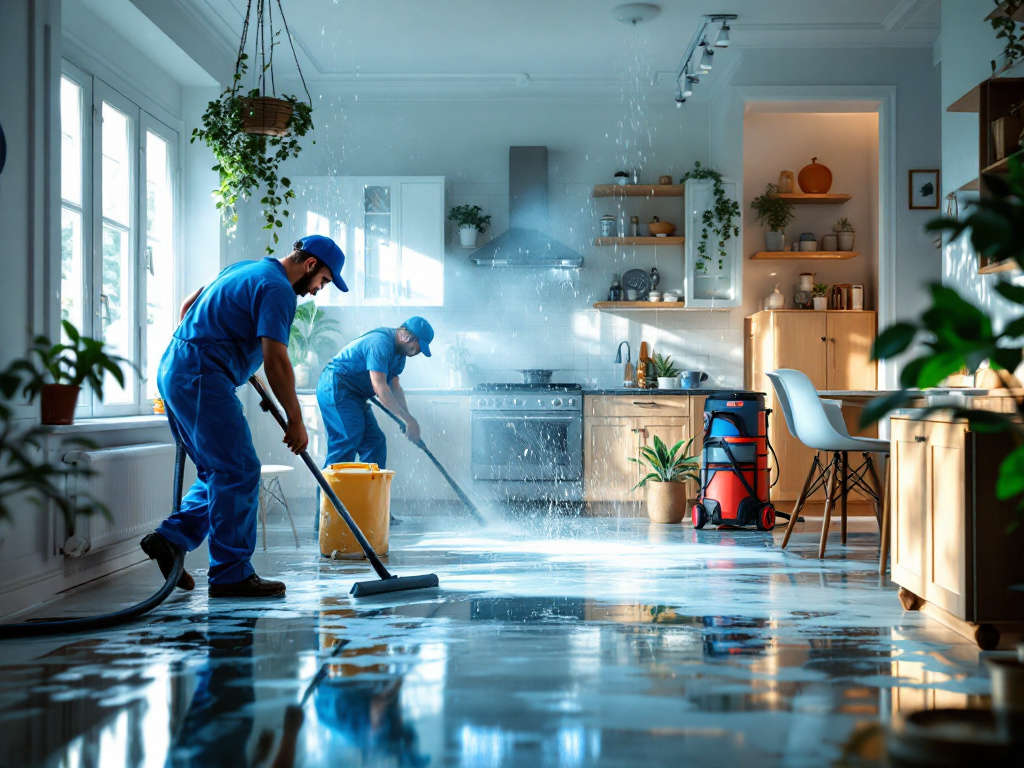
You rely on prompt response when water invades your home. Effective water damage cleanup for residential properties starts with a clear workflow—damage assessment, mitigation, cleanup, demolition, remediation, drying, odor removal, reconstruction, and insurance coordination. With Remedics as your single‐source partner, you get rapid response, trusted technicians, and full-service restoration that returns your home to pre-loss condition.
understand damage assessment
Before any water damage restoration begins, you need a thorough evaluation of your home’s condition. Proper assessment sets the stage for safe, efficient cleanup.
inspect and categorize damage
Your technician will examine every affected area—walls, floors, ceilings, and contents—to determine visible and hidden damage. This includes moisture mapping behind walls and beneath flooring.
classify water contamination
Water type dictates cleanup protocols and cost. Restoration pros use three categories [1]:
- Category 1: clean water from broken pipes or supply lines
- Category 2: gray water with mild contaminants (dishwasher overflow, sump pump)
- Category 3: black water laden with pathogens (sewage, floodwater)
evaluate structural impact
You must know which materials can be salvaged. Drywall below flood lines, carpet padding, and insulation often require removal. Structural inspections prevent future collapse and mold.
For certified evaluation, consider residential property damage assessment.
prioritize emergency mitigation
Stopping the source and minimizing further loss is your next step. Quick action limits your restoration cost and timeline.
stop the water source
Shut off valves or cut power to burst pipes. For flooding, secure pumps to redirect water away from your foundation.
remove standing water
Extraction begins within hours. Using truck-mounted extractors or portable vacuums, technicians remove puddles and seepage. Learn more about emergency water extraction for homes.
apply moisture inspection
After water removal, specialists use moisture meters and thermal cameras to pinpoint hidden pockets of wetness [2]. This guides targeted drying strategies.
Pairing extraction with water mitigation services for homeowners prevents mold and structural decay.
execute cleanup and sanitization
Once water is gone, it’s time to remove contaminants and prepare for rebuilding.
remove damaged materials
Unsalvageable items—wet drywall, soaked insulation, damaged cabinetry—are demolished and hauled off. Black water events require full removal of porous materials.
clean and disinfect surfaces
Technicians apply EPA-registered antimicrobials to sanitize framing, subfloors, and personal belongings. Gray water cleanup demands thorough disinfection to reduce health risks.
prevent mold growth
Mold can start within 24–48 hours after water exposure [3]. You need prompt removal of damp items and use of dehumidifiers. For specialized mold work, see residential mold remediation services or residential water damage mold prevention.
perform structural drying
Efficient drying halts microbial growth and prepares your home for reconstruction.
deploy dehumidifiers and air movers
Industrial-grade dehumidifiers paired with high-capacity air movers accelerate evaporation. A typical ratio is one large dehumidifier for every 7–8 air movers [2].
monitor moisture levels
Smart hygrometers and moisture meters track humidity and building-material moisture in real time [4]. Daily readings ensure drying remains on schedule.
verify dryness
Before rebuilding, confirm all structural components meet moisture thresholds—usually below 15% relative humidity. This prevents mold recurrence and structural warping.
For professional drying you can trust, check residential structural drying services.
conduct demolition and repair
With your structure dry and clean, targeted demolition makes way for repairs and rebuild.
remove unsalvageable building parts
Selective demolition eliminates damaged studs, trim, baseboards, and fixtures. This stage readies framing for new materials.
rebuild and restore
Carpenters and contractors install fresh drywall, flooring, and cabinetry. Your home returns to original or improved condition. For full home rebuilds after water events, explore home reconstruction after water or fire damage.
implement odor removal
Lingering odors from standing water or microbial growth require specialized deodorization.
identify odor sources
Technicians use olfactometers and thermal imaging to locate hidden moisture and mold that emit musty smells.
use deodorization techniques
Advanced methods—hydroxyl generators, ozone treatments, and ULV fogging—neutralize odors at the molecular level. Content cleaning teams handle upholstery, textiles, and cabinetry. See residential content cleaning and restoration.
coordinate insurance and documentation
Handling claims can be confusing. Remedics helps you navigate paperwork and keep your project on track.
document damage and repairs
Your technician photographs all affected areas and compiles detailed scope of work and cost estimates.
work with insurance adjusters
Remedics liaises directly with your insurer, submitting reports and invoices to expedite approvals. This single-source model reduces delays and out-of-pocket expenses.
For comprehensive support, consider residential emergency restoration services.
choose Remedics as partner
When water invades your home, you need more than contractors—you need a trusted ally.
trust rapid response
Our technicians arrive on site within one hour for emergencies in supported regions, minimizing secondary damage and mold risk.
single-source service benefits
cost overview and timelines
Understanding typical costs and durations helps you plan budgets and schedules.
| Restoration phase | Cost range | Timeline |
|---|---|---|
| Emergency mitigation | $450–$16 000 total | 1–2 days |
| Full water removal | $3–$7.50 per sq ft [5] | Same day extraction |
| Mold removal | $2 225 average [5] | 1–5 days |
| Structural drying | Included in mitigation package | 4–7 days [6] |
| Demolition and rebuild | Varies by scope | 30–90 days [7] |
Average full restoration for a moderate water event runs $3 814 to $6 270 in 2025, with extreme cases up to $16 000 [8].
By following this workflow and choosing Remedics as your single-source partner, you secure a swift, professional, and seamless water damage cleanup for residential properties. Your home, health, and peace of mind deserve nothing less.


