
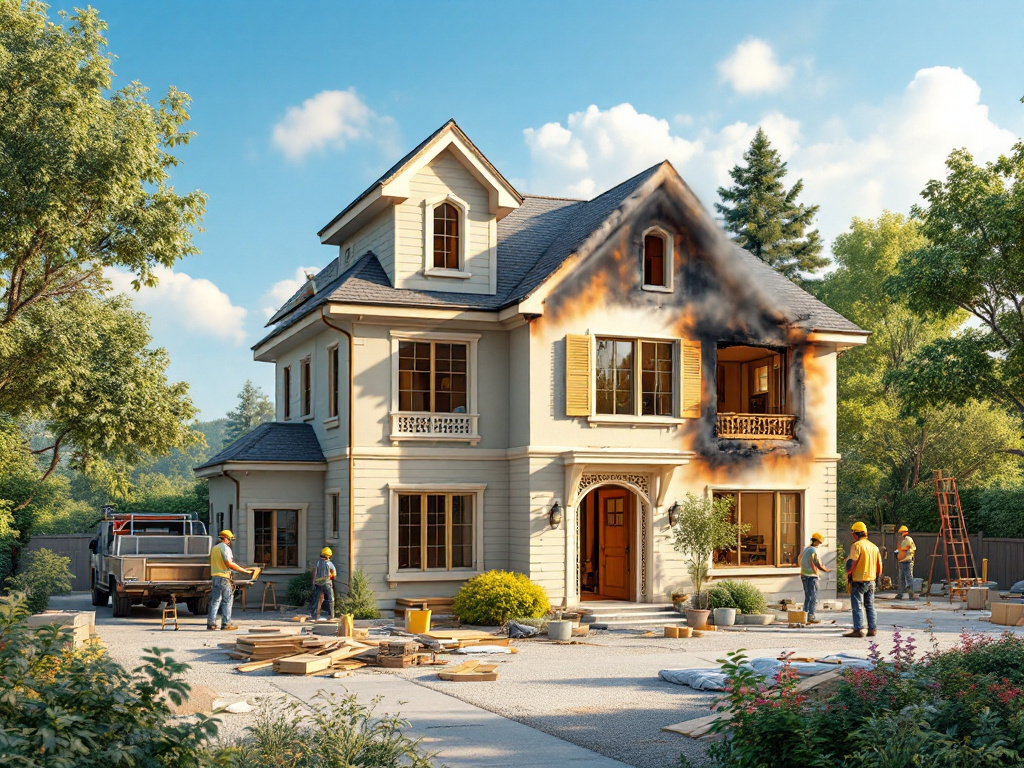
When you face the challenge of a residential home rebuild after fire, you need a clear roadmap, rapid response and a trusted partner. From initial damage assessment through final reconstruction, every stage matters. With Remedics as your single-source partner, you benefit from coordinated services, consistent communication and expertise in emergency response, cleanup, remediation and rebuild.
In this guide you will learn how to:
- Assess fire, smoke and water damage
- Coordinate with your insurer and adjuster
- Secure and mitigate further loss
- Clean up soot, debris and water
- Demolish and remediate unsafe materials
- Dry structures and remove smoke odor
- Choose fire-resistant building materials
- Navigate permitting and final inspections
Follow these steps to return your home to a safe, pre-loss condition with confidence.
Begin restoration assessment
Before cleanup or repair, you must determine the full extent of damage. A thorough assessment sets the stage for accurate scope, cost and timeline.
Inspect fire damage
Walk each room to note charred framing, melted fixtures and heat-weakened components. Look for structural cracks, warped metal and compromised electrical junctions. Engage a licensed structural engineer early for critical areas.
Evaluate water and smoke
Firefighting often floods living spaces. Assess standing water, soaked materials and secondary mold risk. At the same time, inspect smoke-soaked surfaces, hidden soot and airborne particles that can corrode wiring and HVAC systems.
Document losses
Photograph and video every damaged area from multiple angles. Compile a detailed home inventory of destroyed items. Save all records and communications with your insurer to support your claim [1].
For professional help, consider Remedics’ residential property damage assessment services.(/residential-property-damage-assessment)
Plan insurance coordination
Timely and accurate insurance coordination prevents claim delays and maximizes your coverage.
Contact insurer promptly
File your claim as soon as possible after the fire. Your carrier will assign an adjuster to review damage, determine coverage and guide you in filing documentation [1].
Gather documentation
Submit photos, videos, home inventories and receipts for emergency expenses. If you must make urgent repairs to prevent additional loss, keep all receipts, as insurers often reimburse these costs [1].
Coordinate adjuster visits
Schedule inspections at times you or your Remedics project manager can be present. Provide clear access to every damaged area and answer questions about previous repairs, utilities and home history.
Start immediate mitigation
Mitigation limits further damage and readies your home for safe restoration.
Secure property
Board up broken windows, doors and roof openings to prevent weather intrusion and unauthorized entry. Install fencing around hazard zones.
Emergency repairs
Tarp exposed roofing, patch holes and stabilize sagging structures. These measures are often covered under “loss of use” clauses for additional living expenses [2].
Prevent further damage
Shut off utilities as instructed by authorities. Block off electrical panels, gas lines or water mains that pose risk. A swift response may reduce your deductible impact.
For rapid response, rely on Remedics’ residential emergency restoration services.(/residential-emergency-restoration-services)
Execute damage cleanup
Once the property is secure, remove debris and contaminants to prepare for rebuild.
Remove debris
Clear ash, burnt materials and collapsed contents. Use industrial-grade HEPA vacuums to capture respirable soot particles before they spread.
Soot and smoke cleanup
Treat walls, ceilings and surfaces with specialized cleaners to remove acidic soot. Engage fire and smoke cleanup for homes to restore air quality and prevent corrosion.(/fire-and-smoke-cleanup-for-homes) For focused soot removal, choose residential soot removal services.(/residential-soot-removal-services) To fully rehabilitate interiors, consider residential smoke damage restoration.(/residential-smoke-damage-restoration)
Extract water
If firefighting left standing water, extract it immediately with truck-mounted pumps and portable units. Prompt action prevents mold growth and structural decay.
Perform controlled demolition
Demolition removes unsalvageable components while preserving what remains sound.
Identify unsalvageable materials
Inspect framing, drywall, insulation and built-in systems. Remove everything beyond repair or safety standards.
Follow safety protocols
Equip workers with PPE, respirators and containment barriers. Isolate demolition zones to protect adjacent areas from dust and cross-contamination.
Conduct material remediation
After demolition, the focus shifts to preparing safe, clean surfaces for rebuild.
Remove drywall and insulation
Cut out charred drywall and water-logged insulation. Bag and dispose of debris according to local regulations.
Prevent mold growth
Disinfect exposed studs and framing. If moisture levels exceed safe thresholds, call in house mold remediation certified technicians to apply antimicrobial treatments.(/house-mold-remediation-certified-technicians) Proper mold prevention reduces long-term health risks.
Sanitize surfaces
Use EPA-registered solutions to neutralize soot acids, smoke residues and microbial contaminants on wood, masonry and metal.
Implement structural drying
Drying prevents structural decay, mold and lingering odors.
Deploy drying equipment
Set up industrial dehumidifiers, air movers and heaters. Position equipment for optimal airflow through wall cavities, under floors and in crawlspaces.
Monitor moisture levels
Use moisture meters and sensors to track drying progress. Adjust equipment placement and settings until all materials register at safe moisture content.
For expert drying, tap into residential structural drying services.(/residential-structural-drying-services)
Remove smoke odor
Eliminating odor restores comfort and air quality.
Clean HVAC and ducts
Inspect and clean ductwork, coils and vents. Replace filters and sanitize blowers to stop odor recirculation.
Use ozone and thermal fogging
Apply ozone treatments or thermal fogging to oxidize odor molecules in hard-to-reach areas. These advanced methods penetrate fabrics and wood to neutralize smoke smell.
Begin reconstruction phase
With a clean, dry shell, you can rebuild better, safer and smarter.
Select fire-resistant materials
Choose materials that slow flame spread, improve safety and may lower insurance premiums. Consider:
| Material | Fire rating | Benefits |
|---|---|---|
| Reinforced concrete | 60 minutes at 1000 °C | Non-combustible, structural stability [3] |
| Insulated concrete forms | ASTM E119 compliance | Fire resistance, insulation, energy savings [4] |
| Stucco siding | One-hour rating | Durable, non-flammable [4] |
| Synthetic shake roofing | Class A fire rating | Wood look, fire safe [4] |
| Brick | Up to 1200 °C | Thermal mass, durability [3] |
| Gypsum board | Fire-resistant core | Slows heat transfer, commonly used [3] |
| Mineral wool insulation | Up to 1220 °C | Thermal and fire resistance [3] |
Obtain required permits
Work with local building departments to secure demolition, electrical, plumbing and construction permits. Updated codes may apply after a fire, so verify zoning and safety requirements.
Partner with certified contractors
Engage licensed builders, electricians and plumbers experienced in fire rebuilds. For full-service project oversight, rely on Remedics’ residential restoration project management.(/residential-restoration-project-management)
Estimate rebuild cost
Nationally, home rebuilds after fire average $27 175, or $4–7 per square foot for minor repairs [5]. Extensive restorations can range from $51 000 or more, depending on damage severity, materials and scope [6].
Ensure final inspection
A comprehensive final inspection seals performance, code compliance and warranty coverage.
Secure structural engineer sign-off
Have a qualified engineer verify foundation, framing and load-bearing elements meet design and safety standards.
Conduct trades inspections
Schedule electrical, plumbing and HVAC inspections with local authorities. Obtain certificates of occupancy and any warranties.
Review project completion
Walk through each space with your Remedics project manager. Confirm work meets your expectations and all punch-list items are addressed.
Conclusion
A successful residential home rebuild after fire demands a coordinated, expert approach from assessment through final inspection. By choosing Remedics as your single-source partner, you benefit from rapid response, comprehensive services and seamless coordination with insurers and contractors. Trust our residential restoration specialists to restore your home to a safe, resilient and fire-resistant condition.
Ready to begin your rebuild? Contact Remedics now for 24/7 emergency cleanup, full-service reconstruction and peace of mind.


